Date:2026-01-04 21:12:37
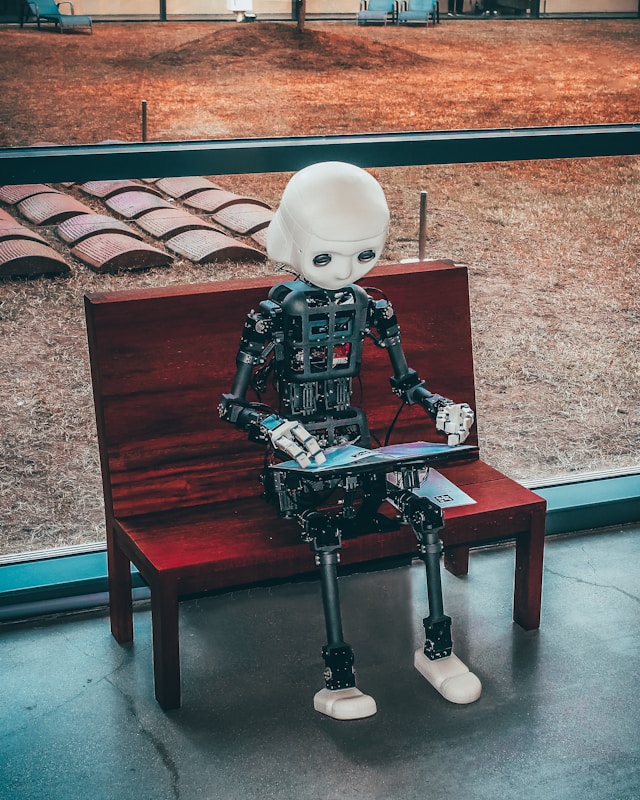
UniX AI is readying its next-generation humanoid robots, Wanda 2.0 and Wanda 3.0, as commercially deployable systems designed for real-world service work.
Built to move beyond controlled demonstrations, targeting environments where reliability, repetition, and adaptability determine whether humanoids can function at scale, the full-size humanoid robot will debut at CES 2026.
Wanda 2.0, UniX AI’s second-generation full-size humanoid robot, is equipped with 23 high-degree-of-freedom joints, an 8-DoF bionic arm, and adaptive intelligent grippers.
According to the company, this configuration allows the robot to perform dexterous manipulation, autonomous perception, and coordinated task execution in complex, changing environments.
Rather than positioning the Wanda series as a showcase of isolated capabilities, UniX AI is framing the robots as general-purpose service systems that can learn workflows, adapt to new routines, and operate continuously across different settings.
The approach reflects a shift in humanoid robotics, where success depends less on novelty and more on operational consistency.
The company says both Wanda 2.0 and Wanda 3.0 are already structured for scale, supported by mature engineering processes and supply chains.
UniX AI claims it has reached a stable delivery capacity of 100 units per month, with deployments planned across hotels, property management, security, retail, and research and education.
Built for real work
To underline practical readiness, UniX AI will demonstrate the robots performing everyday service tasks in simulated environments, including drink preparation, dishwashing, clothes organization, bed-making, amenity replenishment, and waste sorting.
The demonstrations are expected to take place during a major consumer electronics show in Las Vegas, where the company plans to formally unveil the robots.
In one scenario, Wanda 2.0 prepares zero-alcohol beverages ordered through an app, identifying barware, controlling liquid proportions, and pouring steadily.
Other setups replicate household and hotel workflows, emphasizing repeatable, high-frequency tasks that dominate service operations.
Powering the Wanda series is UniX AI’s in-house technology stack, which combines multimodal semantic keypoints with UniFlex for imitation learning, UniTouch for tactile perception, and UniCortex for long-sequence task planning.
The company says this architecture enables robots to perceive environments, plan multi-step actions, and execute tasks autonomously without extensive reprogramming.
UniX AI argues that such capabilities signal a broader inflection point for embodied AI, as humanoid robots move closer to commercial validation.
From scale to society
“The embodied AI industry is moving from the demonstration stage toward the validation and scale-up stage,” said UniX AI Founder and CEO Fengyu Yang.
“The future of embodied intelligence belongs to companies that unify algorithmic capability, hardware capability, and scenario capability.”
Yang said UniX AI plans to continue advancing productization and global expansion following mass production in 2025.
“Chinese embodied intelligence companies are no longer merely providers of cost advantages, but have evolved into entities capable of exporting mature products and application models to global markets.”
By anchoring its reveal in large-scale service scenarios rather than speculative use cases, UniX AI is positioning the Wanda series as part of the next wave of humanoid robots built for deployment, not just display.