Date:2026-03-09 09:04:54
Vast has secured $500 million in funding to advance production of its Haven space stations, with plans to launch Haven-1 in 2027 and establish a continuous human presence in low-Earth orbit by 2030. The financing round, led by Balerion Space Ventures, included participation from Nikon, among others. Total investment in Vast’s space station technology and facilities now exceeds $1 billion.
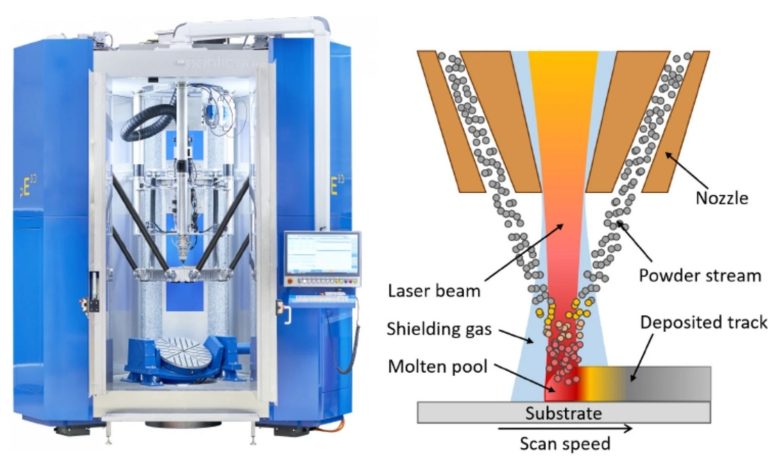
Nikon’s participation in the round extends the company’s decades-long involvement in space technology. Nikon cameras and lenses have been aboard NASA missions since Apollo, and the Nikon Z 9 is slated for the Artemis III lunar mission. Through its NFocus Fund, Nikon is advancing metal additive manufacturing for space applications, with the investment in Vast representing part of a broader strategy to integrate advanced manufacturing into the space sector.
Vast was founded in 2021 and operates as a vertically integrated manufacturer—designing, building, testing, and operating its own spacecraft. In February 2026, the company completed a successful orbital mission with Haven Demo, an in-orbit testbed that validated space station technologies. Haven-1 is currently in integration. The company also won a NASA contract for a private astronaut mission. In addition, Vast is a major adopter of AM for space applications through its acquisition of Launcher, one of the first companies to adopt AM for rocket and space vehicle development and production.
Nikon’s Advanced Manufacturing Business operates large-format metal 3D printers designed for rocket component production and has been selected for the Japan Aerospace Exploration Agency’s Space Strategy Fund program to develop laser powder bed fusion and directed energy deposition systems for high-precision rocket manufacturing. In recent months, Nikon SLM Solutions, a Nikon subsidiary, announced a strategic partnership with ArianeGroup to advance ultra-large-scale AM for space applications and a memorandum of understanding with Rocket Lab to supply multiple units of its upcoming ultra-large-format metal AM platforms.
The convergence of Vast’s space station production and Nikon’s metal AM capabilities creates potential for collaboration on in-space manufacturing infrastructure. Hamid Zarringhalam, Director, President and CEO of Nikon Ventures Corporation, characterized the investment as aligned with Nikon’s long-term commitment to enabling space capabilities. Vast CEO Max Haot also noted the alignment between Nikon’s precision manufacturing heritage and Vast’s mission to expand commercial space activity.
Explore how Nikon and VAST revolutionize space technology with a $500 million investment in the future of space stations.
Max Haot, CEO of Vast, characterized the low-Earth orbit economy as at an inflection point, with Haven stations positioned to provide cost-effective access to microgravity research and in-space manufacturing. A.C. Charania, former Chief Technologist for NASA and founder of Balerion, joined Vast’s board as part of the transaction. Charania noted that Vast is the only operational commercial space station company to have designed, built, and flown its own spacecraft.
Vast’s manufacturing model has achieved a 10-fold reduction in primary structure costs compared to traditional space station programs, according to the company. This cost reduction increases capability and compresses manufacturing timelines. The company’s vertically integrated approach—controlling design, fabrication, testing, and operations—contrasts with traditional space hardware programs that fragment these functions across multiple contractors.
The funding and existing investment represent resources that NASA and government partners could leverage for ISS replacement capabilities. NASA is currently evaluating commercial space station proposals through its Commercial Low Earth Orbit Destinations Phase 2 program, and Vast has submitted a bid to build Haven-2 as a proposed successor to the ISS.
Jed McCaleb, Vast’s founder and an early investor, participated in the current funding round. The company stated its long-term vision encompasses billions of people living and working in space, with near-term milestones focused on proving operational capability in low-Earth orbit.