Date:2026-07-21 08:05:12
The Advanced Design and 3D Printing Unit (UTADI 3D) at Hospital Universitario 12 de Octubre in Madrid has expanded its manufacturing license and secured certification under the UNE-EN ISO 13485:2018 standard from the Spanish Association for Standardization and Certification (AENOR).
The hospital reported that the milestone makes UTADI 3D the first hospital unit in Spain to hold two manufacturing licenses and product family certification across each of its device categories.
The certification positions the unit within a model in which hospitals move beyond using medical devices to developing and producing them in-house, tailored to individual patients.
Clinical applications
Hospital 3D printing has expanded beyond an industrial technique into a clinical tool, with anatomic biomodels among its most established uses.
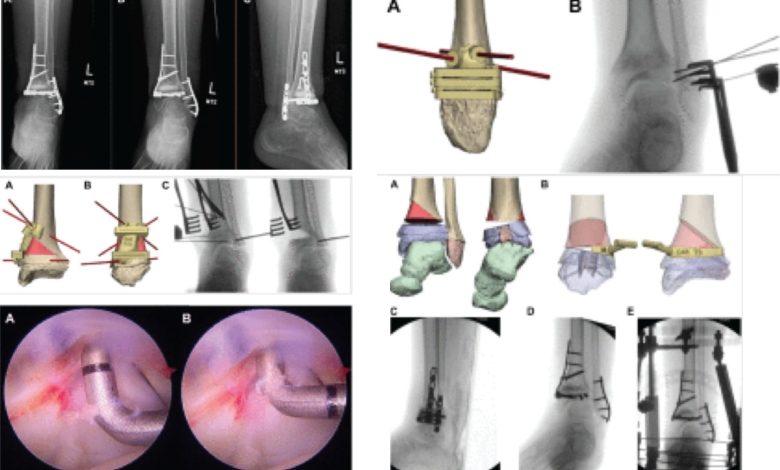
These printed replicas of organs and anatomic structures support surgical planning in fields including cardiac surgery, neurosurgery, maxillofacial surgery and orthopedics, where small anatomic variations can affect a procedure’s outcome. Producing them draws on medical imaging, computer-aided design (CAD), materials science and clinical expertise together.
From imaging to implant
The process begins with CT or MRI imaging to capture a patient’s anatomy, followed by segmentation, in which specialized staff isolate the structures of interest within the scan. A 3D digital model is then reconstructed using CAD software, with adjustments to geometry and thickness, before a material is chosen based on whether the output is an anatomic replica, a surgical device or a biocompatible implant.
The digital file is sent to a 3D printer for layer-by-layer construction, and the finished object typically undergoes cleaning, sterilization or dimensional validation before clinical use.
Housing the full workflow inside the hospital, rather than relying on external manufacturers, cuts wait times, simplifies logistics, improves communication among staff and lowers costs, while allowing more adaptability for complex or unforeseen cases, according to the hospital.
Recent news has seen cases from the UK, Saudi Arabia, and India showing how the technology is being used in a variety of ways across treatment and education.