Date:2026-08-04 08:46:20
Researchers at Seoul National University of Science and Technology (SEOULTECH) have developed porous 3D-printed robot feet that help quadruped robots use less battery power while walking.
The lightweight feet are made from triply periodic minimal surface (TPMS) structures that absorb and release impact energy, reducing the workload on the robot’s motors.
When combined with a deep reinforcement learning controller, the system reduced battery power consumption by up to 6.2 percent at walking speeds between 0.9 –2.2 mph (0.4 and 1.0 meters per second).
According to the team, the approach could improve the efficiency of four-legged robots used for inspection, logistics, search and rescue, and other real-world applications.
Smarter robot footsteps
Quadruped robots are becoming increasingly common in industries ranging from warehouse automation to industrial inspection and search-and-rescue. But despite their versatility, one major drawback remains: they consume significantly more energy than wheeled robots because each step requires constant motor-driven leg movement.
A SEOULTECH team has now demonstrated a novel way to improve the efficiency of these robots by redesigning one of their simplest components—the feet. Their study combines advanced 3D-printed porous structures with artificial intelligence to reduce battery power consumption by up to 6.2 percent while maintaining stable walking.
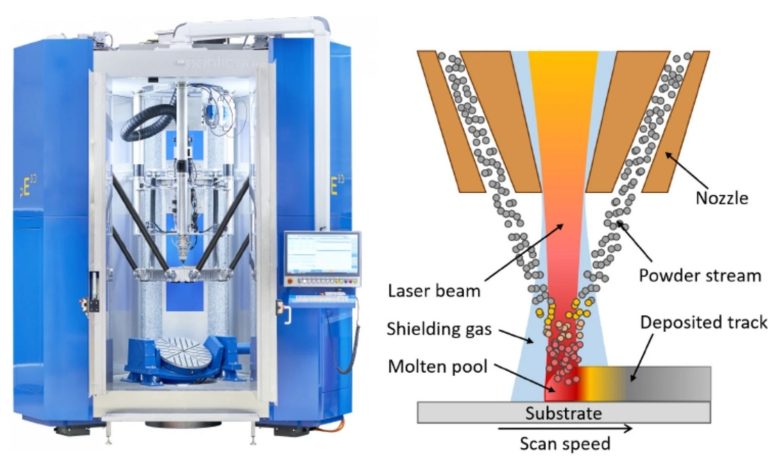
Instead of relying on traditional rigid rubber feet or complex spring mechanisms inside the legs, the team developed lightweight feet based on TPMS structures. These porous lattice designs consist of repeating three-dimensional networks that provide an ideal balance of stiffness, flexibility, and energy absorption.When a robot’s foot strikes the ground, part of the impact energy is normally lost as heat and vibration. The TPMS feet temporarily store some of that energy through controlled deformation before releasing it during push-off, helping propel the robot forward and reducing the workload on its electric motors.
Porous feet deliver
The researchers designed and 3D-printed three hemispherical TPMS variants—primitive, gyroid and diamond—and evaluated their mechanical properties through compression testing. Among them, the diamond structure with a 60 percent relative density delivered the best combination of flexibility, impact absorption and minimal energy loss, making it the optimal choice for the robot.
However, simply adding energy-storing feet was not enough. To fully exploit their elastic properties, the team paired the hardware with a deep reinforcement learning (DRL) controller. Rather than following pre-programmed walking patterns, the AI controller learned how the compliant feet compressed and rebounded during every step. It then optimized the robot’s gait to synchronize motor movements with the stored and released energy, minimizing unnecessary motor effort while maintaining balance.
The optimized system was tested on the commercially available RBQ-10 quadruped robot across walking speeds ranging from 0.9 –2.2 mph (0.4 to 1.0 meters per. Compared with conventional solid feet, the porous TPMS design reduced battery power consumption by 1.4 percent to 6.2 percent, depending on walking speed.
Importantly, the robot maintained stable locomotion throughout testing, showing that the AI controller could effectively harness passive energy stored in the compliant feet without introducing instability or excessive corrective movements.
Unlike conventional approaches that integrate springs into robotic legs, the new design shifts energy storage to the foot itself, simplifying the mechanical architecture while still improving efficiency. Because TPMS structures can be manufactured using standard 3D printing techniques, the technology could also be easier and less expensive to implement in future robotic platforms.
The researchers believe the combination of advanced lattice materials and learning-based control could enable quieter, longer-lasting quadruped robots for applications including warehouse logistics, industrial inspection, indoor service robots and autonomous search-and-rescue systems, where extending battery life without increasing robot size or weight remains a critical engineering challenge.