Date:2026-08-13 10:56:35
University of Melbourne engineering students, working with researchers from CSIRO’s Lab22, fired a 3D printed regeneratively cooled liquid bipropellant rocket engine, becoming the first Australian student team to successfully test-fire such a design at Race2Space, an international student rocketry competition held in the United Kingdom.
The engine, named Slinky, was developed through a University of Melbourne Aerospace and Rocket Engineering Society capstone project. Masters students Jack Gardiner, Brooke Doolan and Stuart Davis worked with Lab22, CSIRO’s national additive manufacturing center, to build the engine, which circulates one of two liquid propellants through channels in the combustion chamber wall to cool it before injection and burn.
Cooling channels built into copper alloy chamber
Regenerative cooling has traditionally relied on complex external piping around the combustion chamber, said Dr. Cherry Chen, Senior Research Scientist and Team Leader at CSIRO. “Now using 3D printing, we can build channels inside the combustion chamber wall, which improve the cooling efficiency,” Chen said.
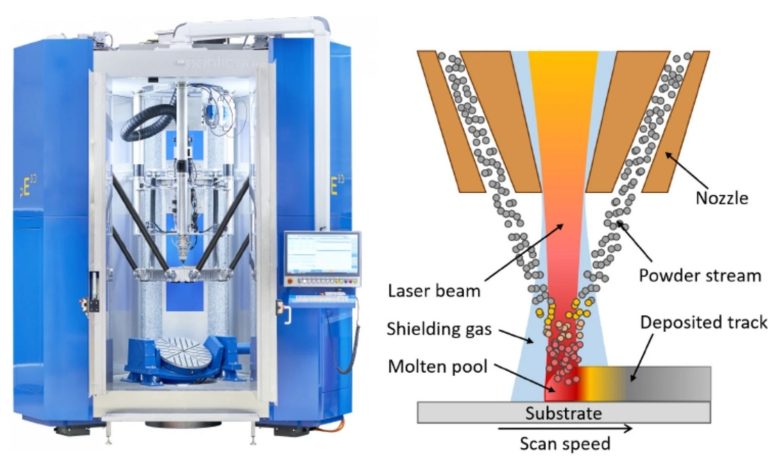
Lab22 produced the engine on a Nikon SLM Solutions 280 2MA laser powder bed fusion system at Clayton, Victoria, using a copper alloy chosen for its thermal conductivity and suitability for high heat flux environments. The finished engine weighed approximately 6 kilograms, about the size of a large pineapple.
Engine wins category at UK trials
The students transported the engine to the United Kingdom this month for Race2Space. Slinky completed five hot-fire tests in a day, including throttling runs, reaching a maximum thrust of 5.4 kilonewtons, comparable to a small lunar lander engine, and won the LOX bipropellant category.
“We’re absolutely thrilled to be at the cutting edge of computational engineering and demonstrating the results that its integration can achieve,” said Davis, an Aerospace and Mechanical Engineering Masters student at the University of Melbourne.
The organizations described the result as the first regeneratively cooled liquid rocket engine successfully fired by an Australian student team at Race2Space.