Date:2026-10-21 09:32:39
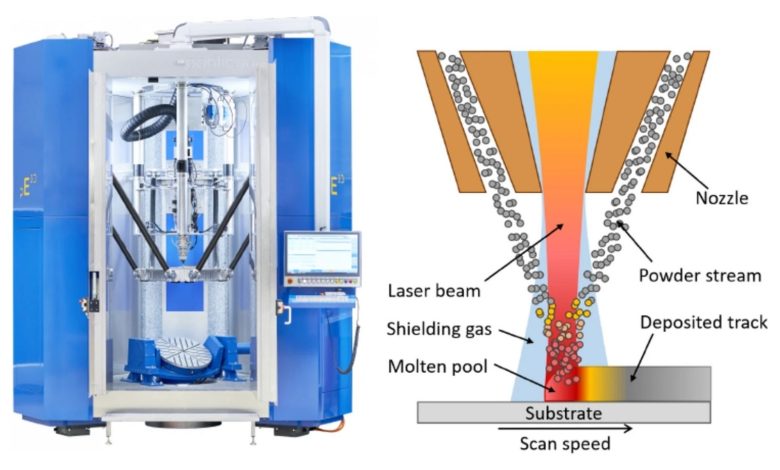
Researchers led by the IMDEA Materials Institute and Universidad Politécnica de Madrid (UPM) have developed a method to 3D print braided structures from the superelastic alloy nitinol in a single production step.
The team included researchers from the Massachusetts Institute of Technology (MIT) and the University of Galway, and the technology behind the structures –which target minimally invasive transcatheter devices (MITDs), which must compress to pass through a catheter–has been patented and received the National James Dyson Award.
“The clinical impact of nitinol-based MITDs has been transformative for cardiovascular interventions,” said Carlos Aguilar Vega, one of the authors of the study. “However, despite their widespread clinical adoption, current manufacturing methods impose fundamental geometric limitations that restrict their optimization and personalization.
“While recent advances in powder metallurgy-based techniques, such as spark plasma sintering, have expanded the manufacturing possibilities for these devices, it remains challenging to develop implants that combine complex geometries, mechanical flexibility and patient-specific anatomical adaptation.”
Most metallic medical devices made through additive manufacturing rely on lattices, but their mechanical behavior depends mainly on the bending of rigid struts. Compressed lattices become excessively stiff, exert high forces on arterial walls and risk fracture at strains approaching 25%. Braided architectures instead accommodate deformation through the movement and reorientation of interwoven filaments.
To reach the surface finish required for implantation, the team applied chemical etching and electropolishing, which reduced fiber thickness by a reported 47.7% and cross-sectional area by 71.1%, compared with the as-printed structures.
The braided stents then withstood compression of up to 50% of their original diameter while maintaining more than 90% elastic recovery. Chronic outward force was up to five times lower than in conventional lattices, which the researchers said reduced the risk of vascular injury and thrombosis.
“Lattice structures manufactured using conventional additive manufacturing techniques are unable to achieve the high degree of reversible deformation required for transcatheter applications,” said Aguilar Vega.
“Braided architectures, on the other hand, can readily accommodate the large deformations required while maintaining both structural integrity and elastic recovery.”
The team validated several prototypes mechanically using a single compression-expansion cycle that replicated insertion into a catheter and release.
In vitro biocompatibility testing and animal studies must precede clinical investigations in patients, and the researchers have also identified neurovascular devices for remote, hard-to-access regions of the brain as a further target. That would require additional miniaturization of nitinol structures with technologies such as ultra-high-precision 3D printing based on two-photon polymerization using metallic suspensions, as well as magnetic functionalization for remote magnetic navigation.